
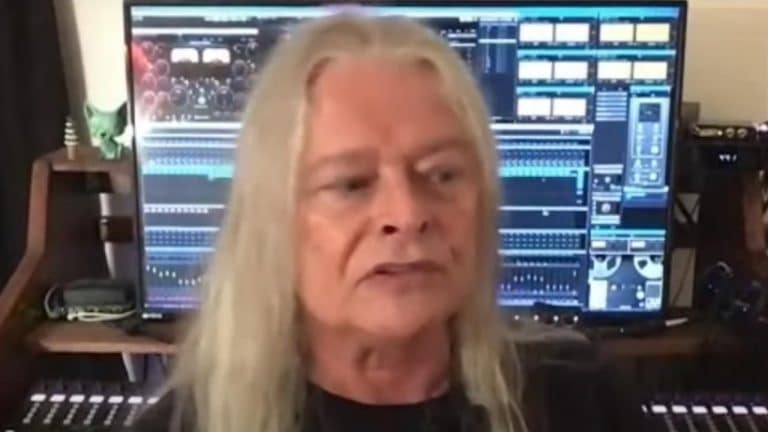
In an industry that once thrived on the allure of meticulously crafted studio albums, Max Norman, a legendary producer known for his work with Ozzy Osbourne, has sounded a clarion call that challenges the very foundation of recorded music. Speaking candidly on the podcast Talk Louder, Norman expressed a sentiment that is both a critique and a prediction of the music industry’s trajectory. He declared that producing “high-quality records” has become a futile endeavor in today’s saturated market, where thousands of new releases flood the scene daily, making it nearly impossible for any single album to truly stand out.
Norman’s argument hinges on the overwhelming volume of music that is now available, which he believes dilutes the impact of even the most exceptional albums. The digital age has ushered in an era where accessibility and quantity overshadow quality, with listeners inundated by an endless stream of new music. “Nobody is making top-notch records because there are 10,000 records coming out every day,” Norman noted, humorously pointing out that even the best albums struggle to capture meaningful attention. His insights highlight a paradox where the democratization of music production and distribution, while empowering, has also led to a scenario where remarkable works are often lost in the noise.
Despite his reservations about the current value of studio recordings, Norman sees a bright future for live music. He acknowledges the growing emphasis on live performances and suggests that this shift could ensure the longevity of the music industry. The rise of tribute and cover bands, according to Norman, underscores a demand for live experiences that capture the essence of beloved music. He even jested about iconic bands like Kiss potentially becoming tribute acts themselves, possibly harnessing artificial intelligence to sustain their legacy. To Norman, the irreplaceable magic of live shows lies in their raw, unrepeatable nature, offering authenticity and character beyond the polished confines of studio recordings.
In closing, Norman’s perspective offers a compelling vision of the music industry’s future, where live performances could become the cornerstone of musical expression. By advocating for mobile recording setups in clubs to capture these ephemeral moments, Norman emphasizes the unique value of live music—a value that cannot be replicated by the countless recordings released each day. As the industry navigates this evolving landscape, Norman’s insights serve as both a critique of current practices and a hopeful glimpse into the enduring allure of live musical experiences.

The conversation 0
Different voices. A shared love of heavy music.
Be the first to share your thoughts.
What stands out to you? Start the conversation.
Join the conversation
Keep it thoughtful and respectful. Comments are reviewed before appearing.