
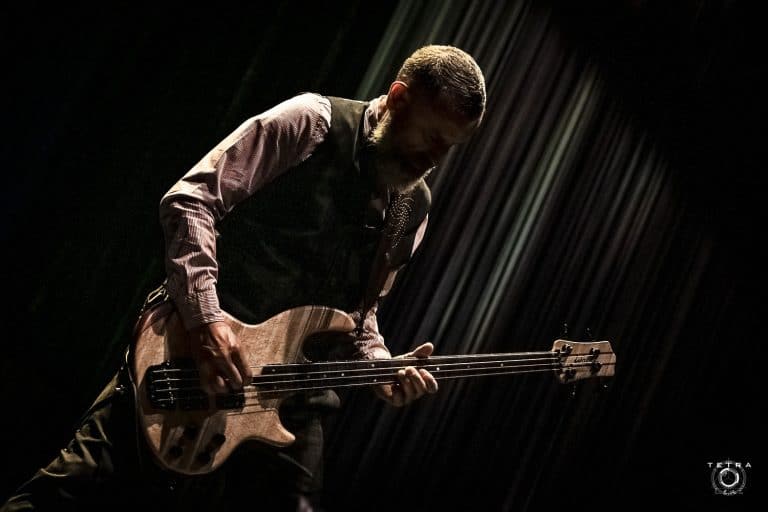
The departure of Paul D’Amour from Tool in 1995 marked a pivotal moment for the band, then riding high on the success of their platinum-certified debut album, *Undertow*. While the move sparked curiosity and questions from fans and industry insiders alike, it was D’Amour’s desire for greater creative freedom that ultimately led him to step away. His recent reflections reveal a nuanced tale of artistic divergence and the complex dynamics of a band on the cusp of greater fame. Yet, what often goes unmentioned is the crucial role D’Amour played in securing Tool’s future by mentoring his successor, Justin Chancellor.
In a candid interview with Bass Player in 2020, D’Amour peeled back the layers of Tool’s creative process, describing it as “atrocious and tedious,” and pointed to the rigid roles within the group that stifled his creative input. This frustration fueled his decision to leave, seeking a broader artistic canvas. However, D’Amour’s departure was not the end of his influence on Tool. Rather, it marked the beginning of a transition that he actively facilitated by mentoring Chancellor. D’Amour invited Chancellor into his home, sharing not just the technicalities of Tool’s music but also the intricacies of its distinct sound. He meticulously guided Chancellor through the band’s repertoire, demonstrating his techniques with octave pedals, Whammy pedals, and phasers, ensuring that Chancellor could carry forward the sonic legacy he helped establish.
D’Amour’s mentorship was instrumental in Chancellor’s seamless integration into Tool, coinciding with the release of the landmark album *Ænima*. Chancellor’s debut with the band was met with acclaim, as he effortlessly shouldered the bass duties and brought his unique flair to the table. His contributions have since become an integral part of Tool’s evolving sound, cementing his role within the group. This successful transition highlights the foresight and generosity of D’Amour, who, despite his departure, was deeply invested in the band’s continued success. As D’Amour himself noted, he wanted Chancellor to succeed, recognizing the potential within his friend and successor.
In retrospect, D’Amour’s decision to mentor Chancellor ensured not only the continuity but also the growth of Tool’s sound, testament to his enduring impact on the band. By sharing his knowledge and techniques, he laid the groundwork for Chancellor’s contributions, which have become a cornerstone of Tool’s enduring legacy. This behind-the-scenes narrative adds a layer of depth to Tool’s history, showcasing the collaborative spirit and mutual respect that have propelled the band through decades of musical evolution.


The conversation 0
Different voices. A shared love of heavy music.
Be the first to share your thoughts.
What stands out to you? Start the conversation.
Join the conversation
Keep it thoughtful and respectful. Comments are reviewed before appearing.