
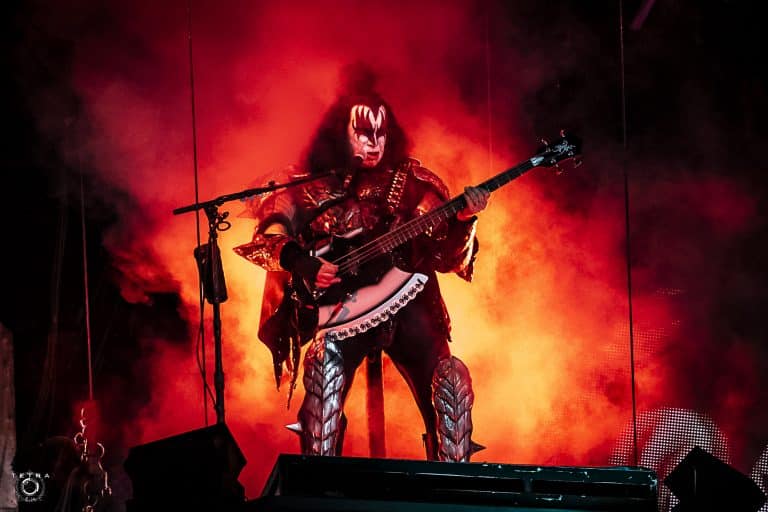
In a candid revelation that has resonated with rock enthusiasts, Gene Simmons, the iconic bassist and co-founder of Kiss, has taken full responsibility for what he deems the band’s most regrettable studio album. In an interview with Classic Rock, Simmons pinpointed “Music From ‘The Elder'” as Kiss’s nadir, a choice that comes as little surprise to the band’s dedicated followers. Originally intended to herald a return to the hard rock roots that defined their early success, the 1981 album instead spiraled into an ill-fated attempt at crafting a medieval-themed concept album, a decision Simmons now openly critiques.
Simmons recounted the album’s genesis, admitting the concept was his brainchild, pitched to producer Bob Ezrin. “Bob said, ‘Let’s make our own Tommy!’,” Simmons recalled, referencing The Who’s legendary rock opera. “I said, ‘Yes. If The Who can do it, why not us?’. Well, the answer is simple: because we are not The Who!” Despite a niche group of fans who cherish the album, Simmons reflects on it as a misstep, labeling it “dishonest” in its attempt to garner critical acclaim rather than staying true to the band’s authentic sound.
Further reflecting on Kiss’s discography, Simmons divulged that “The Elder” is not, in his view, the band’s most insincere effort. That distinction, he believes, belongs to “Carnival of Souls (The Final Sessions)” from 1997, an album heavily swayed by the grunge movement. “We were trying to follow a trend instead of being ourselves,” Simmons confessed, underscoring a pattern of missed opportunities in the studio. He acknowledged that Kiss has always excelled more in live performances than in studio recordings, with only a few exceptions like 1976’s “Destroyer” and 1992’s “Revenge” standing out in his estimation.
This admission aligns with the sentiments of Paul Stanley, another cornerstone of Kiss, who has been vocally critical of “Carnival of Souls.” In the 2001 group biography “Kiss: Behind the Mask,” Stanley expressed his firm opposition to the album’s creation, asserting, “I never believed the world needed a second-rate Soundgarden, Metallica, or Alice in Chains.” Such reflections from the band’s leading figures offer a rare glimpse into the internal dynamics and decision-making processes that have shaped Kiss’s enduring legacy in the rock pantheon.


The conversation 0
Different voices. A shared love of heavy music.
Be the first to share your thoughts.
What stands out to you? Start the conversation.
Join the conversation
Keep it thoughtful and respectful. Comments are reviewed before appearing.