
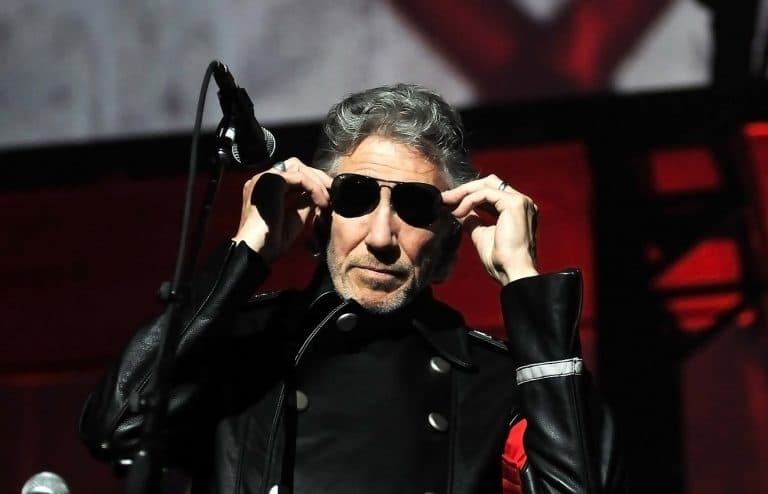
Roger Waters, the outspoken former bassist and co-founder of Pink Floyd, has once again stirred controversy, this time by directing pointed criticism at Radiohead’s Thom Yorke and Jonny Greenwood over their artistic choices and stance on the Israeli-Palestinian conflict. In a recent interview for the documentary series *Empire Files*, Waters didn’t mince words, labeling Yorke an “idiot” and depicting him as “deeply insecure” for his perceived apathy towards the situation in Palestine. Waters’ comments are the latest in a series of public disputes that began when Radiohead performed in Tel Aviv in 2017, a decision Waters has consistently denounced as irresponsible.
Reflecting on past interactions, Waters recounted a 2017 email exchange with Yorke, where he attempted to engage the singer in dialogue following his criticism of Radiohead’s performance in Israel. According to Waters, Yorke’s failure to respond led him to conclude, “He isn’t even capable of having a conversation. He thinks he’s very clever, but he isn’t.” Yorke, on the other hand, defended his stance back in 2017, asserting, “Playing in a country isn’t the same as endorsing its government.” This fundamental disagreement highlights contrasting philosophies on the role of artists in sociopolitical issues.
Jonny Greenwood, Radiohead’s guitarist, has also been a target of Waters’ ire. Greenwood’s recent collaboration with Israeli artist Dudu Tassa drew criticism from Waters, who disparaged such collaborations as “nonsense.” Greenwood, however, maintains that silencing Israeli artists due to their nationality is not conducive to finding common ground between Israelis and Palestinians. This reflects a broader debate about cultural boycotts, with Waters advocating for them as a means to support Palestinian rights, while Yorke and Greenwood emphasize artistic freedom and intercultural dialogue.
As this public spat continues, it underscores deeper divisions within the music community regarding the Israeli-Palestinian conflict. While Waters remains steadfast in his view that the situation is unequivocally a “genocide,” Yorke and Greenwood appear committed to their belief in the power of music to bridge divides. With such entrenched positions, the rift between Waters and Radiohead is likely to persist, emblematic of the ongoing debate over the responsibilities of artists in times of political strife.



The conversation 0
Different voices. A shared love of heavy music.
Be the first to share your thoughts.
What stands out to you? Start the conversation.
Join the conversation
Keep it thoughtful and respectful. Comments are reviewed before appearing.