
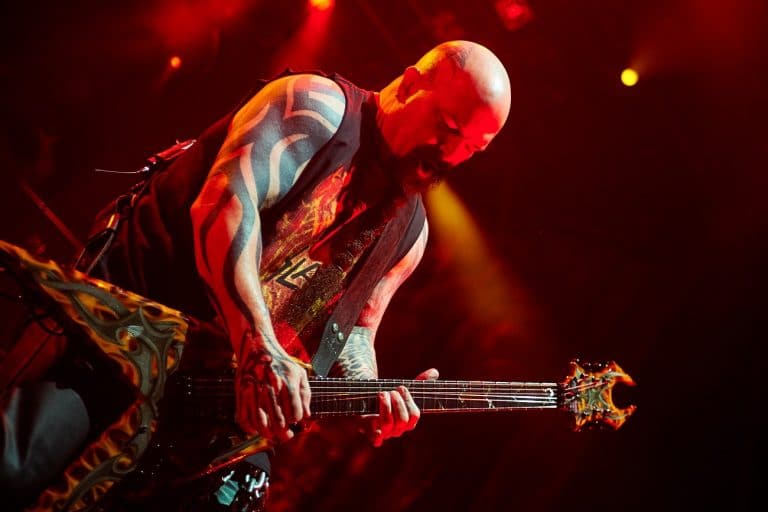
In the realm of heavy metal, where musicianship and power collide in thunderous harmony, Kerry King stands as an emblematic figure, wielding his guitar with a ferocity that has defined Slayer’s legendary sound. Yet, even icons have their initial misgivings, as King candidly revealed in a recent interview with Scott Lipps. Reflecting on his early aversion to punk, King admitted that the genre’s simplistic chords and raw energy initially clashed with his deep-seated love for the grandeur of classic heavy metal. “I didn’t understand punk at the beginning,” he confessed, contrasting it with the towering vocals and intricate compositions of metal gods like Ronnie James Dio and Ozzy Osbourne.
For King, heavy metal epitomized musical mastery, a showcase of technical prowess championed by guitarists such as Tony Iommi, Glenn Tipton, and Adrian Smith. In his eyes, punk’s rawness seemed almost antithetical to the skill-driven world he cherished. However, time and collaboration can alter even the staunchest of opinions. Jeff Hanneman, Slayer’s co-founder and a punk enthusiast, was instrumental in weaving punk’s frenetic energy into the fabric of the band’s sound. King’s early reluctance eventually gave way to appreciation, particularly as Slayer’s style evolved from the complex layers of “Hell Awaits” to the unrelenting aggression of “Reign in Blood.” This transformation marked a pivotal moment in thrash metal, highlighting a seamless fusion of metal’s intricacy with punk’s unvarnished power.
As Slayer’s journey continued, King found himself embracing punk’s influence more than ever, especially towards the latter part of Hanneman’s career. This shift not only solidified Slayer’s role in shaping thrash metal but also underscored the dynamic nature of musical evolution. Beyond music, King celebrated the unique camaraderie within the metal community, describing it as a “fraternity” that transcends generational divides. Yet, he acknowledged the challenges posed by metal’s passionate fanbase, who demand authenticity and consistency from their icons. In a genre where respect must be continually earned, King’s journey from skepticism to integration illustrates the enduring power of artistic growth and collaboration.



The conversation 0
Different voices. A shared love of heavy music.
Be the first to share your thoughts.
What stands out to you? Start the conversation.
Join the conversation
Keep it thoughtful and respectful. Comments are reviewed before appearing.