
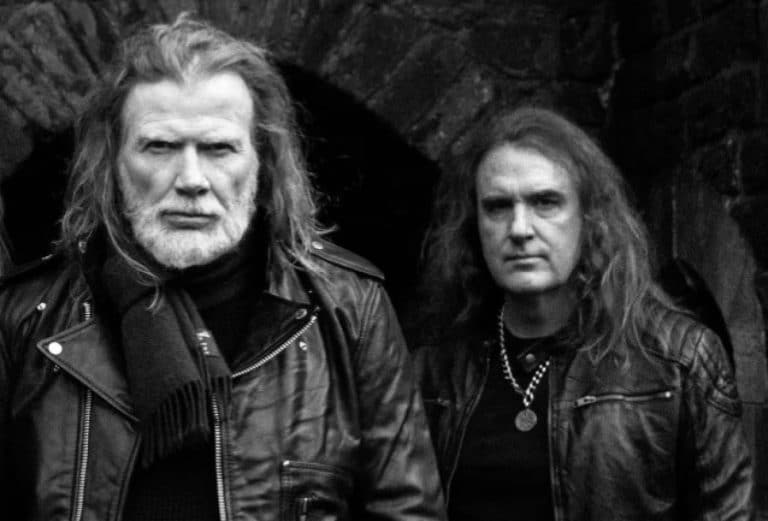
In the ever-evolving world of heavy metal, few bands have navigated the turbulent waters of genre experimentation quite like Megadeth. During the 1990s, Megadeth embarked on a journey toward a more mainstream sound, aiming to capture a broader audience with albums such as “Countdown to Extinction,” “Youthanasia,” and “Cryptic Writings.” However, it was “Risk” in 1999 that marked a controversial turning point, as the band veered further from their thrash metal roots. In a candid discussion on the Talk Toomey podcast, former bassist David Ellefson reflected on this pivotal era, acknowledging the consequences of their mainstream aspirations.
Ellefson recounted a telling comment from Larry Mazer, who took over management after “Risk”: “You zigged while the rest of the world zagged.” This succinct observation captures the essence of Megadeth’s misstep—pursuing mainstream appeal just as the nu-metal wave of bands like Disturbed, Godsmack, and Korn was cresting. While Megadeth and their contemporaries like Metallica experienced significant success throughout the 90s, the early 2000s saw a resurgence of bands that stayed true to their thrash metal roots, such as Slayer and Testament. Their unwavering commitment to their original sound eventually paid off with renewed popularity and credibility.
Ellefson also shared a memorable exchange with Slayer’s Kerry King, who expressed relief that “Risk” was not part of his band’s discography. This conversation underscores the contrasting paths taken by Megadeth and Slayer; while Megadeth experimented with a more polished, mainstream sound, Slayer remained steadfast, preserving their authentic thrash metal identity. The divergence in strategy illustrates a broader lesson in the music industry: staying true to one’s artistic roots can sustain credibility and long-term success.
Ultimately, while Megadeth managed to recover from the critical backlash of “Risk,” the experience served as a cautionary tale about the perils of straying from a core identity in pursuit of broader appeal. Unlike Slayer and Testament, who maintained a consistent artistic vision, Megadeth’s foray into mainstream territory was a gamble that did not entirely pay off. As the dust settled, the enduring appeal of authenticity in heavy metal became increasingly apparent, offering a poignant reminder of the genre’s fundamental values.



The conversation 0
Different voices. A shared love of heavy music.
Be the first to share your thoughts.
What stands out to you? Start the conversation.
Join the conversation
Keep it thoughtful and respectful. Comments are reviewed before appearing.