
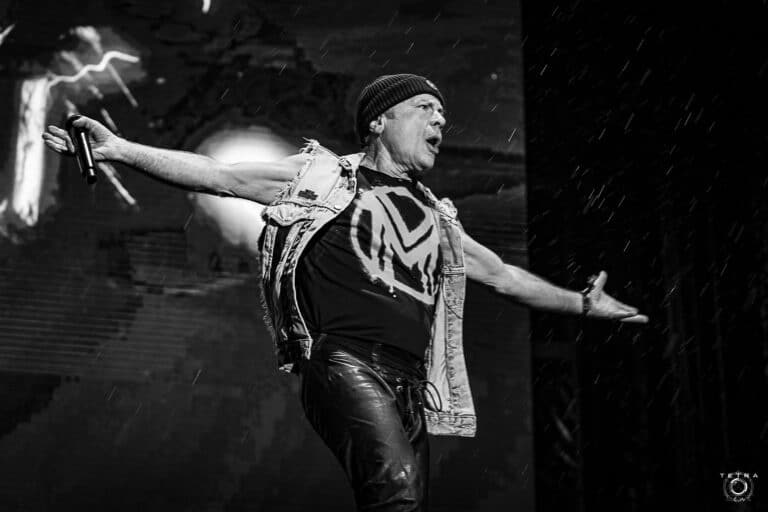
In the blinding glare of rock stardom, Bruce Dickinson, the legendary frontman of Iron Maiden, grappled with the intoxicating pitfalls of fame during the whirlwind era of the 1980s. This decade, often romanticized for its hedonistic excesses, was a crucible of relentless touring and unbridled indulgence. Dickinson reflects on this tumultuous time with a candidness that pierces through the glamorized veneer of rock ‘n’ roll. The frenetic pace of life on the road—performing up to eight concerts in ten days—extracted a toll that each band member managed in their own way. “We were under constant stress. Lack of sleep, self-destruction… It was alcohol, drugs, women. Every day, it started all over again,” he recalls.
The turning point for Dickinson came during a tour with Mötley Crüe, a band notorious for their extreme lifestyle. Witnessing their self-destructive behaviors was a sobering experience for Dickinson, prompting an introspection that would alter the course of his life. “We toured with Mötley Crüe… Desperate cases, and mostly self-inflicted. I thought to myself, ‘Please, tell me I’m not going to end up like that!'” he confesses. The end of Iron Maiden’s World Slavery Tour in 1985 marked a critical juncture for Dickinson, who contemplated leaving the music industry altogether. The unrelenting demands of fame had eroded his personal relationships to the point where he questioned the worth of continuing in music.
Dickinson cites a poignant warning from Pete Townshend of The Who, who cautioned him about the seductive ease with which desires could be fulfilled in their world. This realization drove Dickinson to seek balance through pursuits outside music, notably taking up fencing to maintain mental clarity. “At some point, you ask yourself, ‘Where is the limit?’ That’s when I decided to do something else to keep a mental balance,” he explains. Now, at 66, Dickinson speaks with a sense of peace, albeit tinged with regret over missed moments with his children. Yet, he has carved out a harmonious existence, both personally and musically, acknowledging, “I am very happy today, as my wife is very attentive to my mental health… But I think I’m very bad for hers!”
In sharing his journey from the edge of rock ‘n’ roll chaos to a place of equilibrium, Dickinson offers a narrative that resonates far beyond the music world. His story serves as a testament to the resilience required to navigate the treacherous waters of fame and the enduring quest for personal fulfillment amidst the cacophony of a rock star’s life.


The conversation 0
Different voices. A shared love of heavy music.
Be the first to share your thoughts.
What stands out to you? Start the conversation.
Join the conversation
Keep it thoughtful and respectful. Comments are reviewed before appearing.