
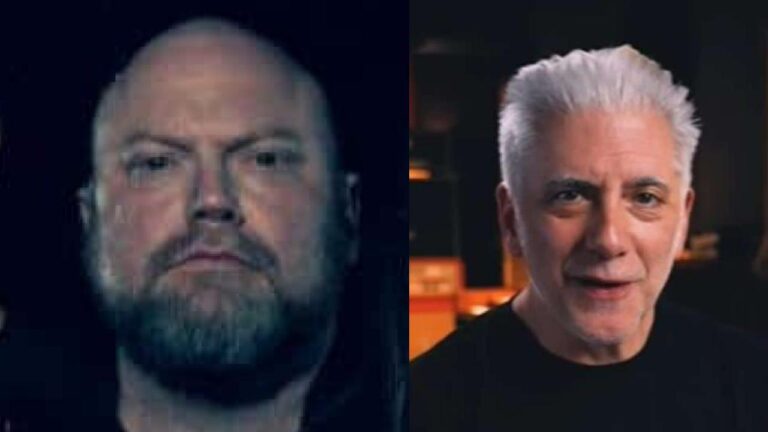
In an era where technology has democratized music production, the discourse around its impact on the art form has sparked fervent debate among industry veterans and newcomers alike. Eyal Levi, founder of URM Academy and guitarist for Dååth, has recently entered the conversation, offering a compelling rebuttal to Rick Beato’s critical assessment of modern music. Beato, a well-known YouTuber and former producer, lamented in his video “The Real Reason Why Music Is Getting Worse” that the ease of creating music today has diluted its authenticity and value. Levi, however, argues that the real issue lies not with the technology itself but with how it is wielded by artists and producers.
Levi methodically counters Beato’s points, challenging the notion that tools like auto-tune, quantization, or amplifier simulators inherently diminish musical quality. He acknowledges that while music production has become more accessible, the creation of truly great music remains as challenging as ever. “It’s more accessible to be mediocre,” Levi states, “but making great music is as difficult as it has always been.” He emphasizes that the misuse of technology, rather than the technology itself, is to blame for subpar results. For instance, while quantizing a drummer like John Bonham might be a poor choice, the tool itself is not inherently flawed. Similarly, auto-tune, when used judiciously, can enhance emotion without detracting from the music’s feel—something Levi believes legendary bands like Queen or The Beatles would have embraced had they had access to it.
Furthermore, Levi addresses Beato’s critique of sound homogenization within the metal genre. He points out that the preference for certain presets today is a continuation of past trends, such as the widespread use of Marshall or 5150 amps in the 1990s. The unique, highly polished aesthetic of subgenres like djent or progressive metal is celebrated as an artistic choice rather than a technological crutch. Levi also challenges Beato’s negative view of streaming, asserting that it has revolutionized the music landscape by providing a platform for countless independent artists who were previously sidelined by major labels. While Beato likens streaming platforms to a mindlessly flowing tap, Levi argues that they have opened doors for discovery, albeit amid a saturation of cultural offerings. He contends that the ability to curate personal music experiences today outweighs the rose-tinted nostalgia for past eras filled with forgettable album tracks.
In closing, Levi posits that technology’s role in music is neither inherently positive nor negative; it is the artist’s vision and understanding of their tools that ultimately shape the outcome. He underscores the mission of URM Academy to foster producers who use technology to manifest their artistic vision, rather than relying on formulaic approaches. “Stop romanticizing the past,” Levi urges. “Understand your tools, develop your artistic sense, and create music that truly resonates.” Through his thoughtful response, Levi not only defends modern music-making methods but also champions a future where technology serves as a conduit for genuine artistic expression.



The conversation 0
Different voices. A shared love of heavy music.
Be the first to share your thoughts.
What stands out to you? Start the conversation.
Join the conversation
Keep it thoughtful and respectful. Comments are reviewed before appearing.