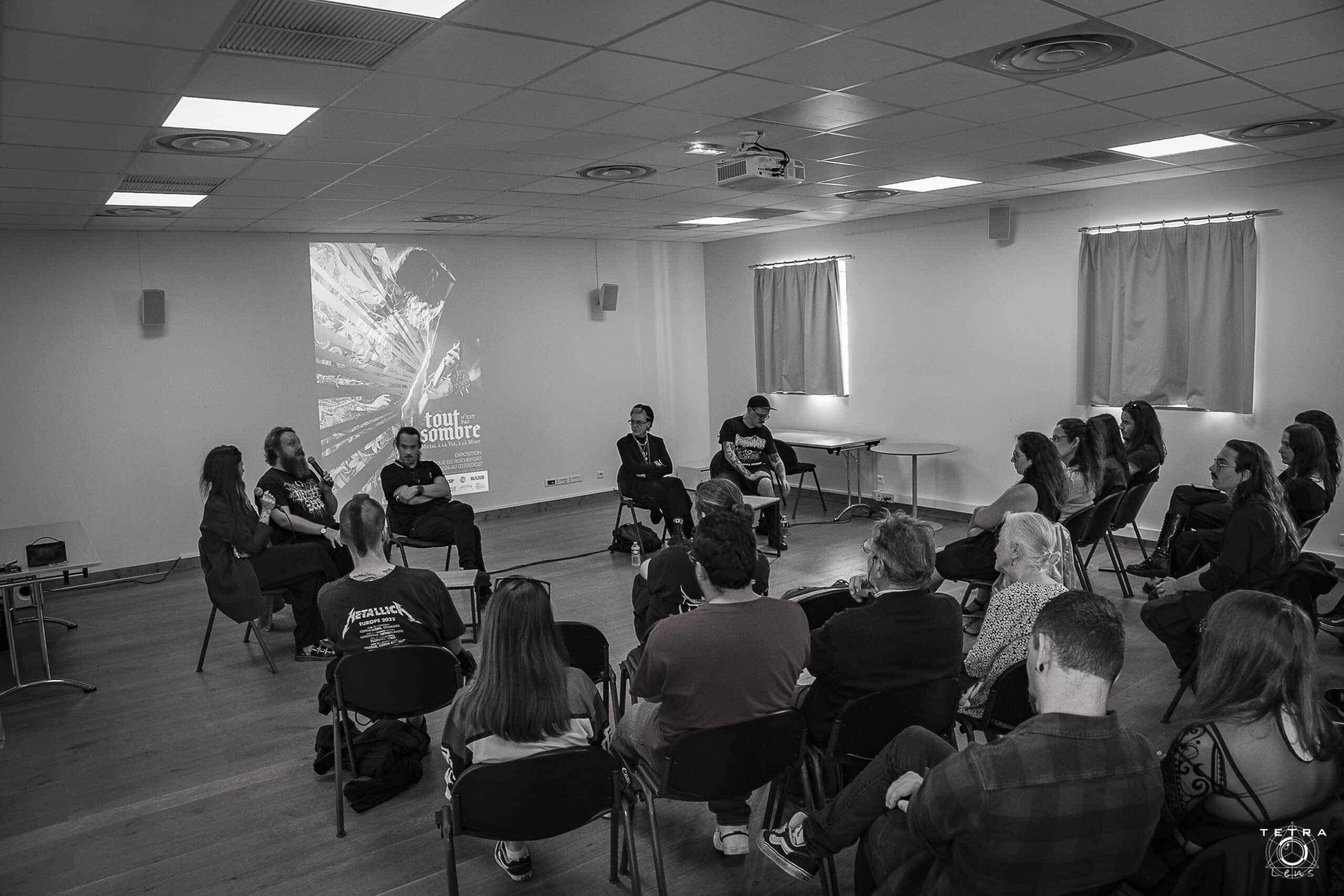
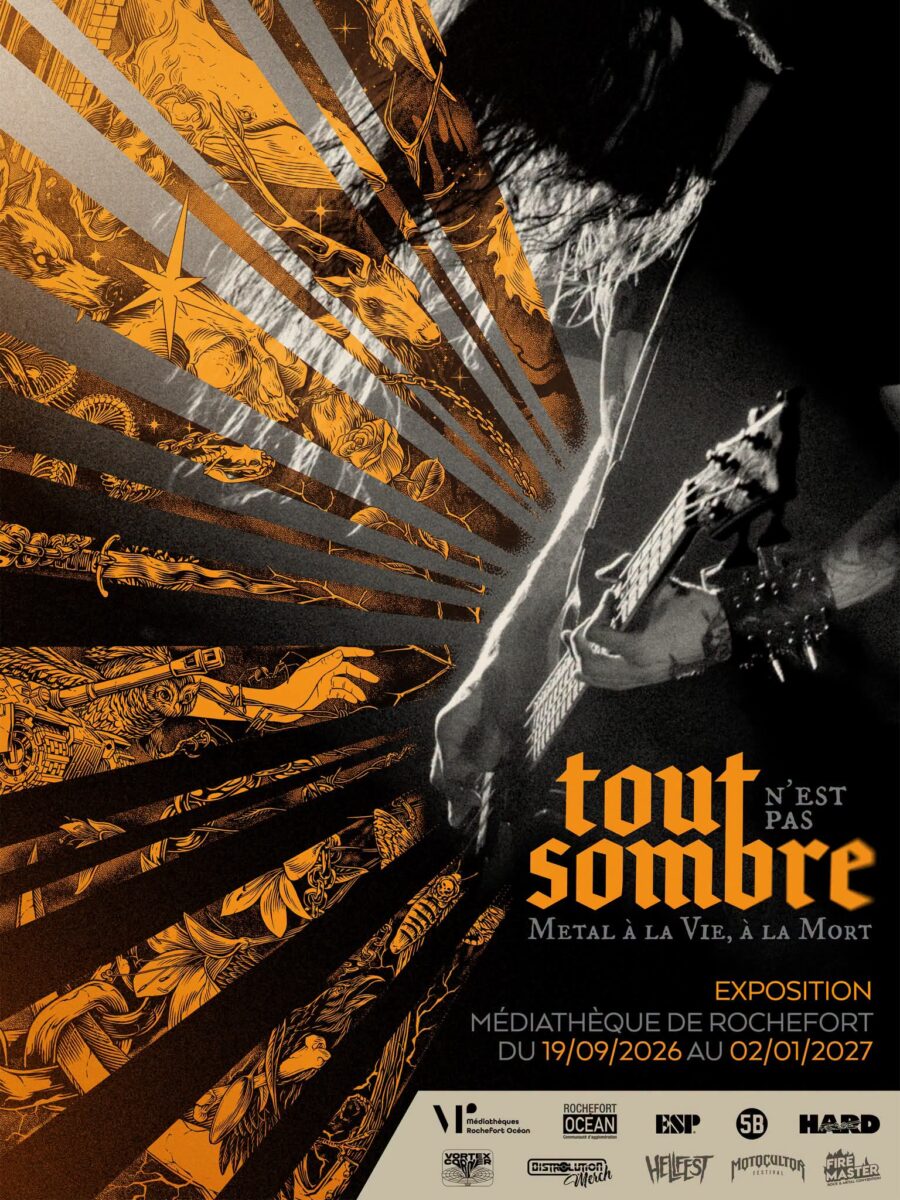
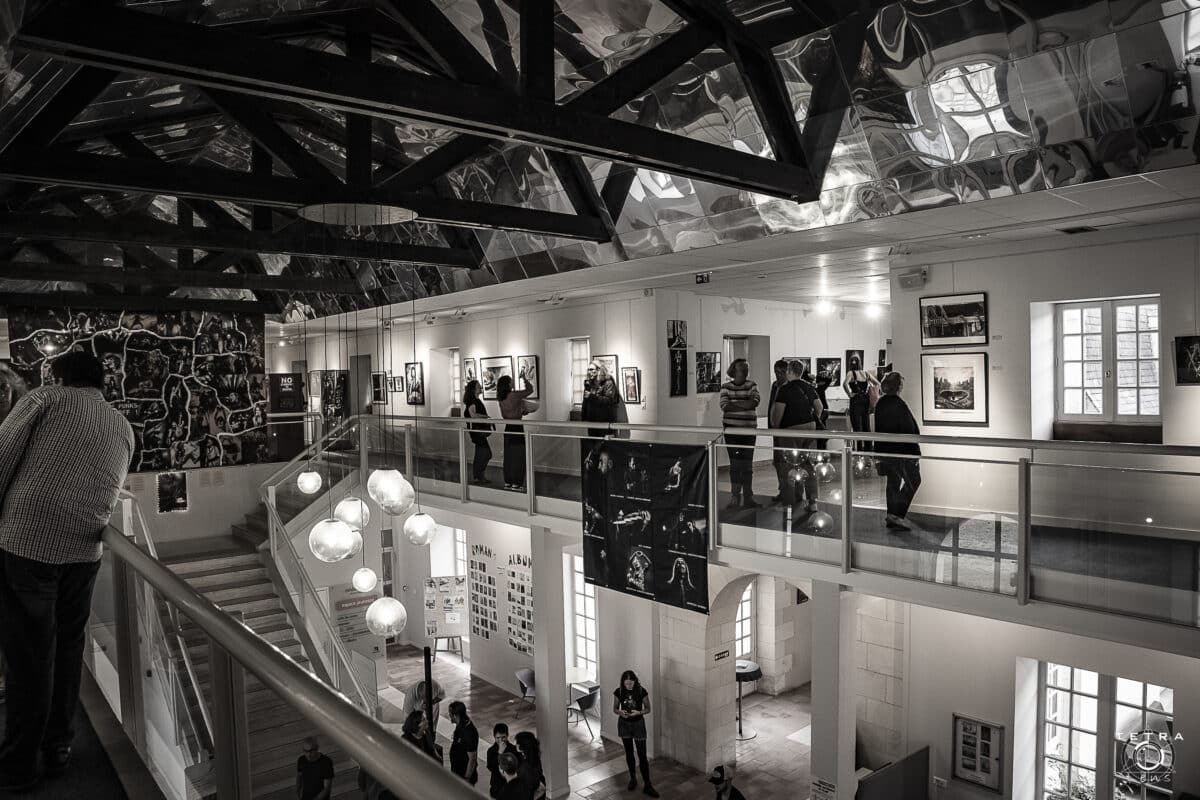
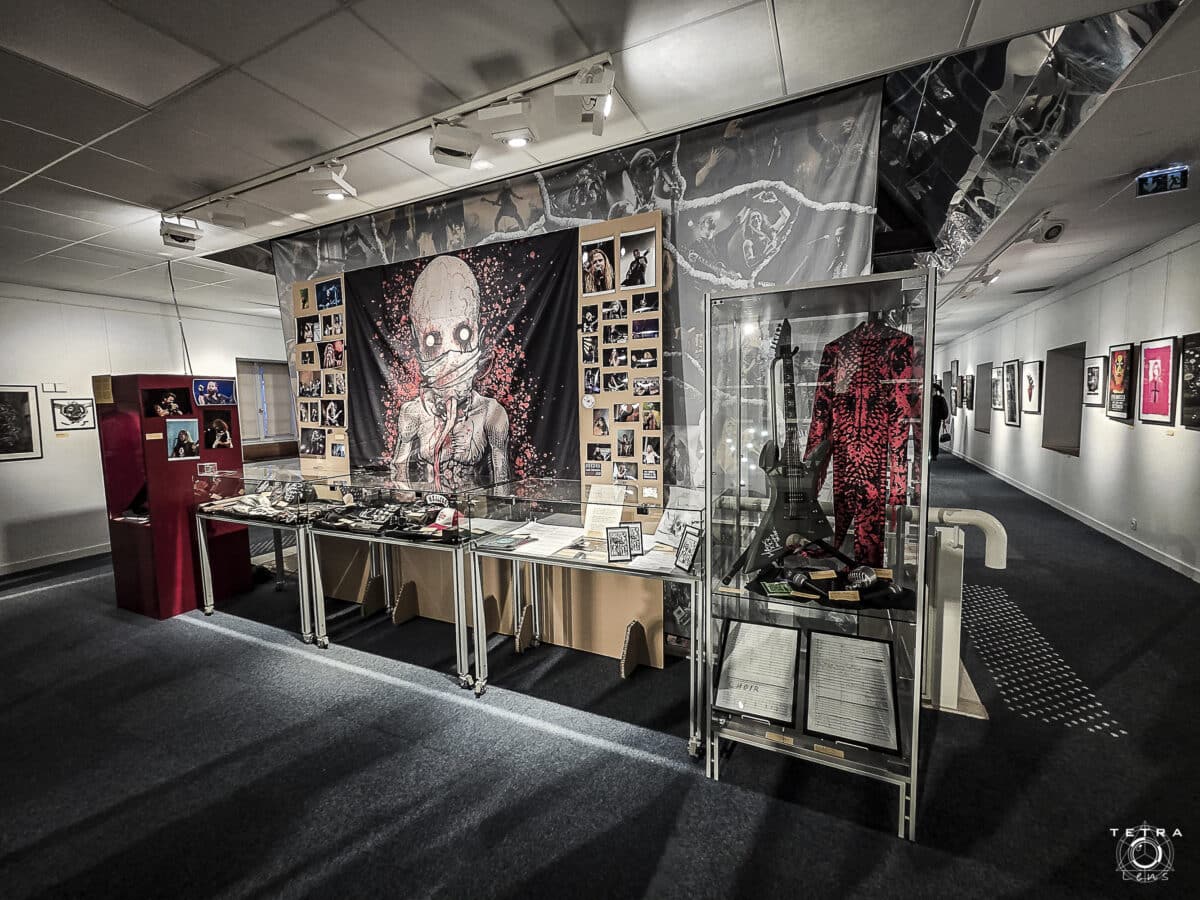
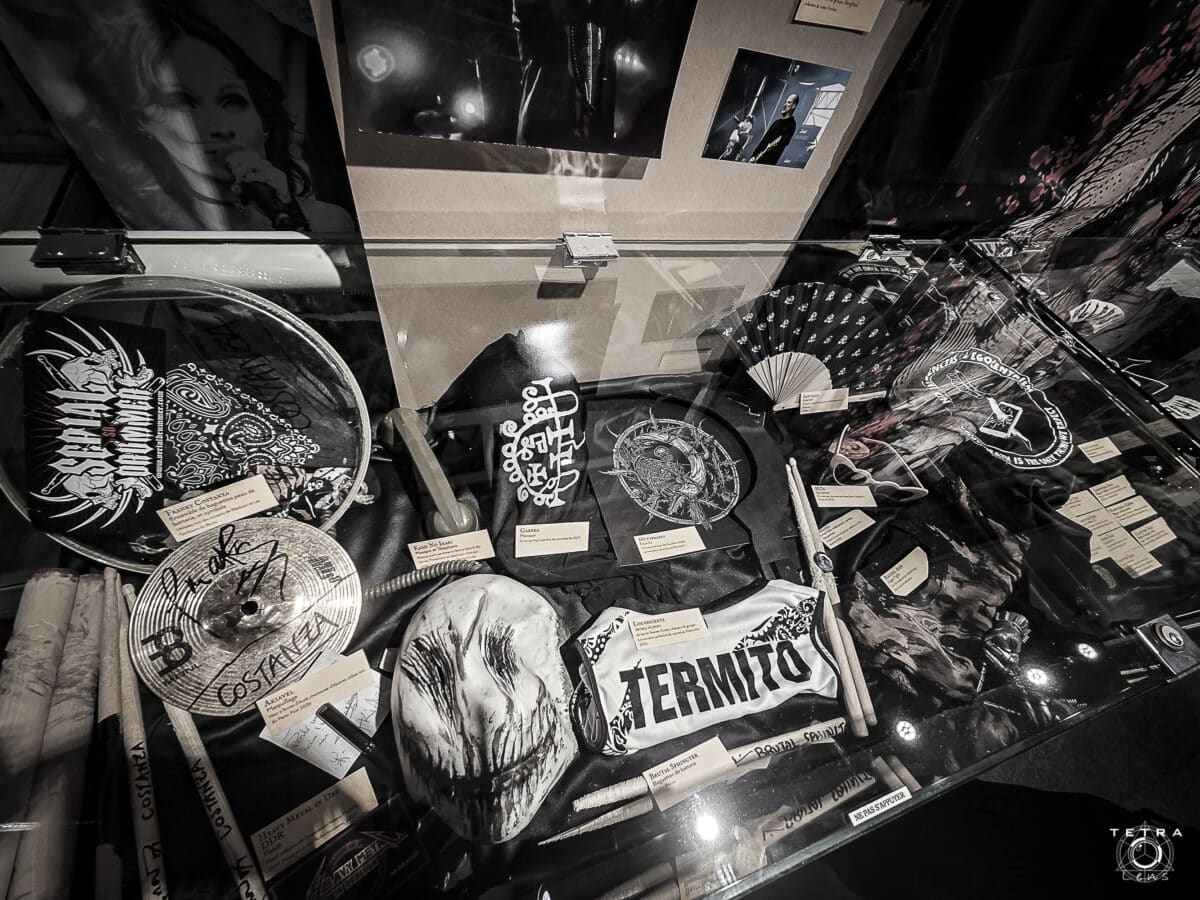
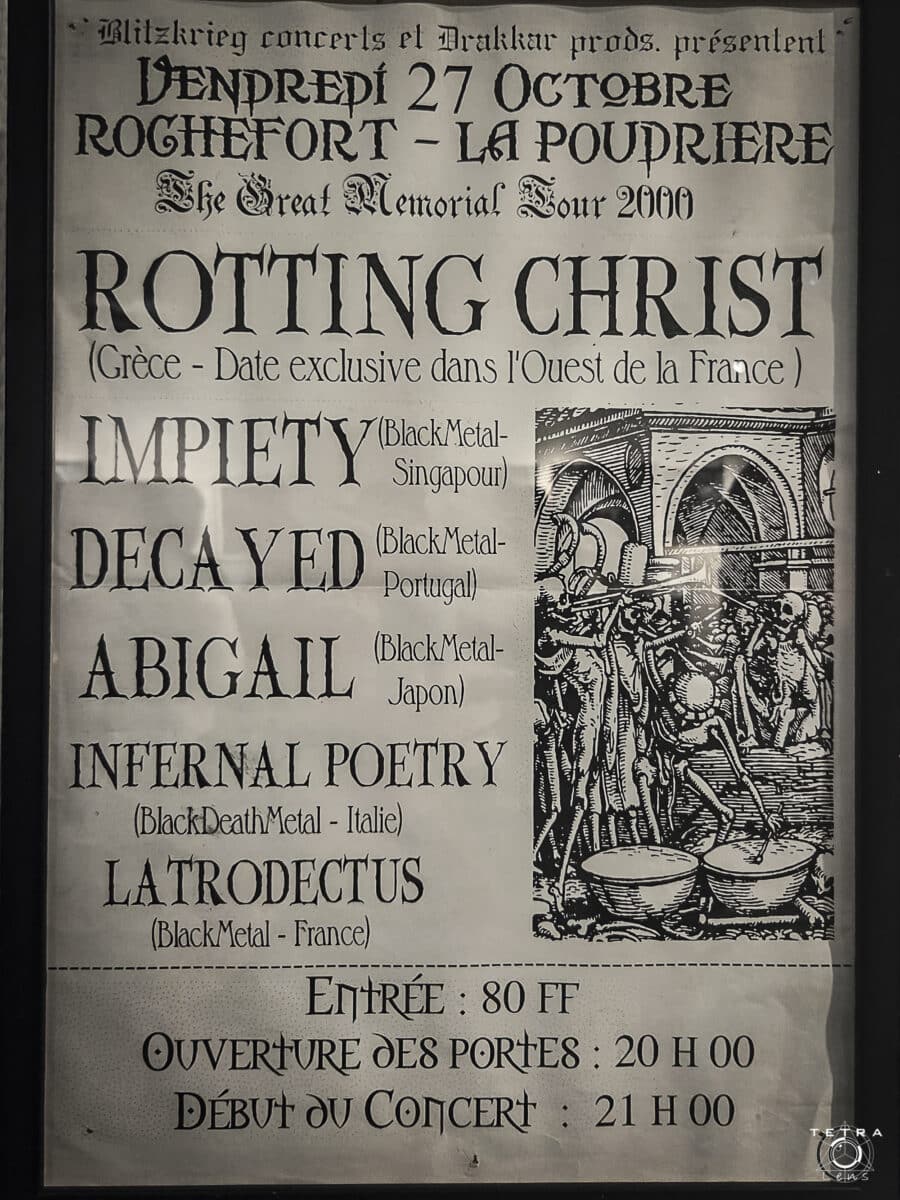
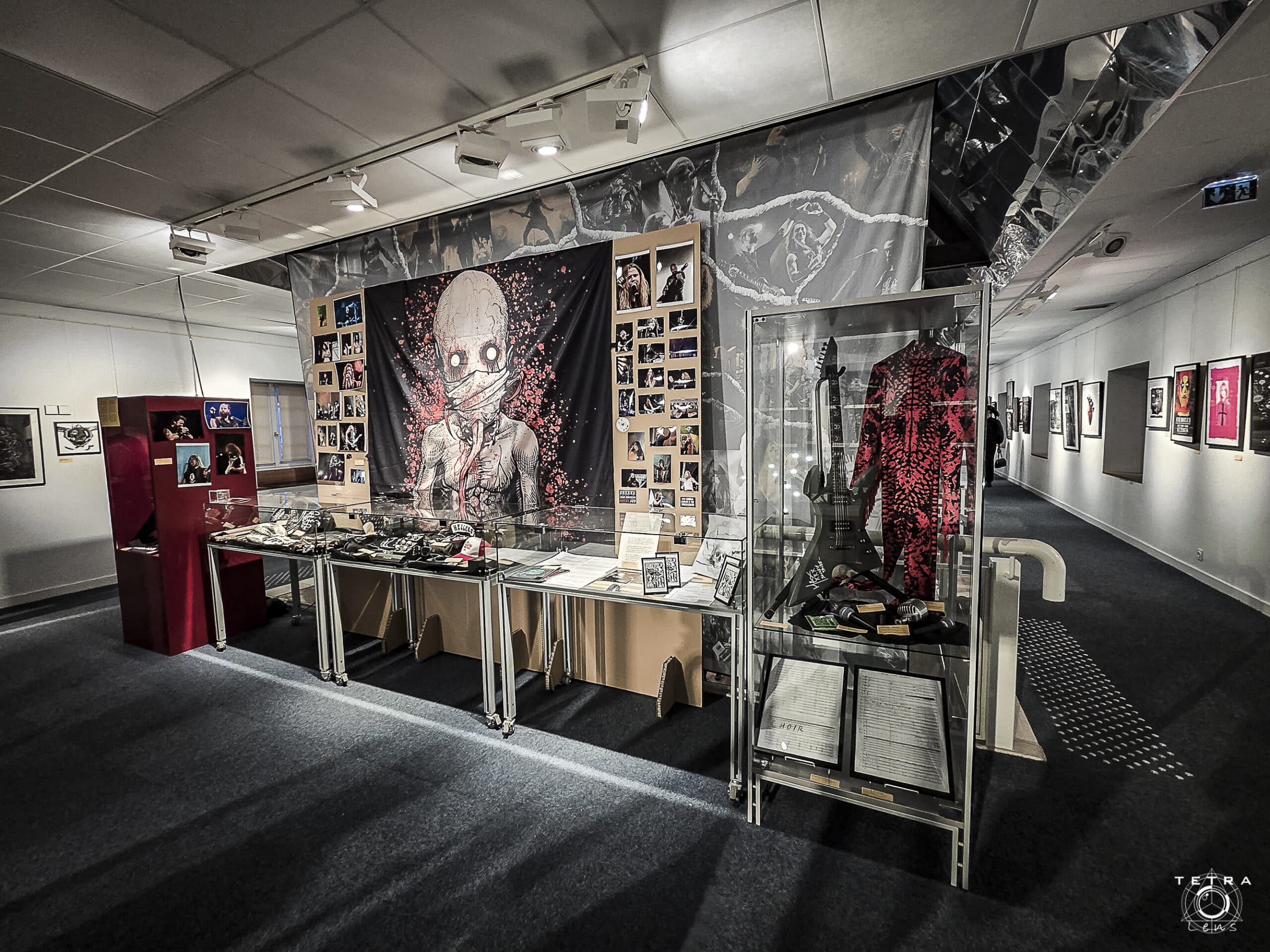
From album covers to tattoo designs, metal goes on display at the Rochefort media library. From September 19, 2026 to January 2, 2027, the exhibition All Isn’t Dark: Metal, in Life and in Death brings together artwork connected to 130 bands and the work of 50 visual artists. Speaking at the opening, curator Corentin Charbonnier discusses his choices, from making room for emerging artists to introducing this world to people beyond the metal scene.
MZ: Can you briefly introduce yourself and tell us a bit about your background?
C: I started this year as a lecturer in management sciences at the IUT de l’Indre. Before that I taught anthropology. I’ve taught all over the place, and I put on exhibitions and take photos. I like being active in metal and having the other part of my life in education.
MZ: How did you discover metal?
C: I got a CD player when I was pretty young, and I was told to pick a CD to go with it. Summer compilations, Céline Dion, Patrick Bruel, none of that was my thing even then. I stumbled across Metallica’s Ride the Lightning by pure chance. I thought the cover was amazing. And I’ve been hooked ever since.
MZ: How old were you?
C: Twelve or thirteen, and I immediately heard the classical music I knew in those riffs. I think Ride the Lightning is perfect if you come from a classical background. I’d been playing harp since I was five. I still play occasionally.
MZ: Did you first get into photography for your research?
C: Yes, I took photography classes as part of my anthropology studies. At the time, I felt there wasn’t much out there on the metal scene, so part of it was about documenting it. Later I shot for media outlets and exhibitions and occasionally freelanced for agencies. It depends on what I feel like doing. I know I’ll never make a living out of it. Photography is a tough business, and I want it to stay a passion. Just like music.
MZ: You wrote your PhD thesis on the metal world. How was it received in academia?
C: When I started looking into it, a few researchers were already working on it. Christophe Guibert had done a survey on Hellfest in 2006. Alexis Mombelet, Nicolas Walzer and Olivier Bobineau were studying black metal, focusing more on its corrosive side. Their research is great, but I wanted to know what brings us together and what sets us apart. Hellfest is pretty central to all that, and I spent five or six years studying it.
I spent 20 years in anthropology, where 90% of the time people look at you like you’re nuts. You can study all sorts of things, and then it’s like, “Ugh, it’s still just metal.” It’s different in management sciences, where you study ecosystems and the people who make them work. There are loads of artists in metal. Some go unpaid, and others get paid in different ways. There’s an economy there, too.
MZ: I’ve read a thesis on punk. I get the impression it goes down better than metal…
C: I don’t know. I think of Gildas Lescop, who studied the early skinhead movements. He had a pretty rough time of it for a while, too. I think it depends on your university, the academic circles you work in and where you are.
With Gojira at the Olympics, Hellfest drawing a full house and the exhibition at the Philharmonie, we had this trio of events in 2024 that nobody saw coming. You can feel the momentum. We even put a T-shirt at the entrance to the exhibition to thank the influencers. It’s cynical, of course. The economics are changing too, and it’s pretty scary because we’re going mainstream. Some festivals bring in 50 influencers and court mainstream media for wider coverage. Maybe the big festivals need to do that. These days, Hellfest is a gateway into metal. When I was writing my thesis, it was the festival for metalheads, by metalheads.
We’ve got influencers who wrote a book about modern metal last year, even though two years ago they weren’t listening to it. When you’re an anthropologist or a researcher, you spend years studying a subject before you feel ready to write about it and back up what you say with sources and data. So before you write a book, take the time to find out what the scene is like, where it came from, how it developed, where its roots are in deathcore and metalcore, and what people have already done.
MZ: In this exhibition, you chose to show the metal community in a positive light through the music, the artwork, its relationship with nature and the way it keeps its scene alive. Have I missed anything?
C: No, that’s it. I had a clear idea of what I wanted. I’m in a media library, and I know kids come here. A kid shouldn’t miss out on the music because the artwork scares them off at the door. And if they come across Cannibal Corpse or Aborted, I’ll still be happy. We’ve had loads of older people come in, too. They’d never have come if I’d put something disgusting right at the entrance. I wanted it to be accessible. It’s also a way to show respect for the people who asked me to do it.
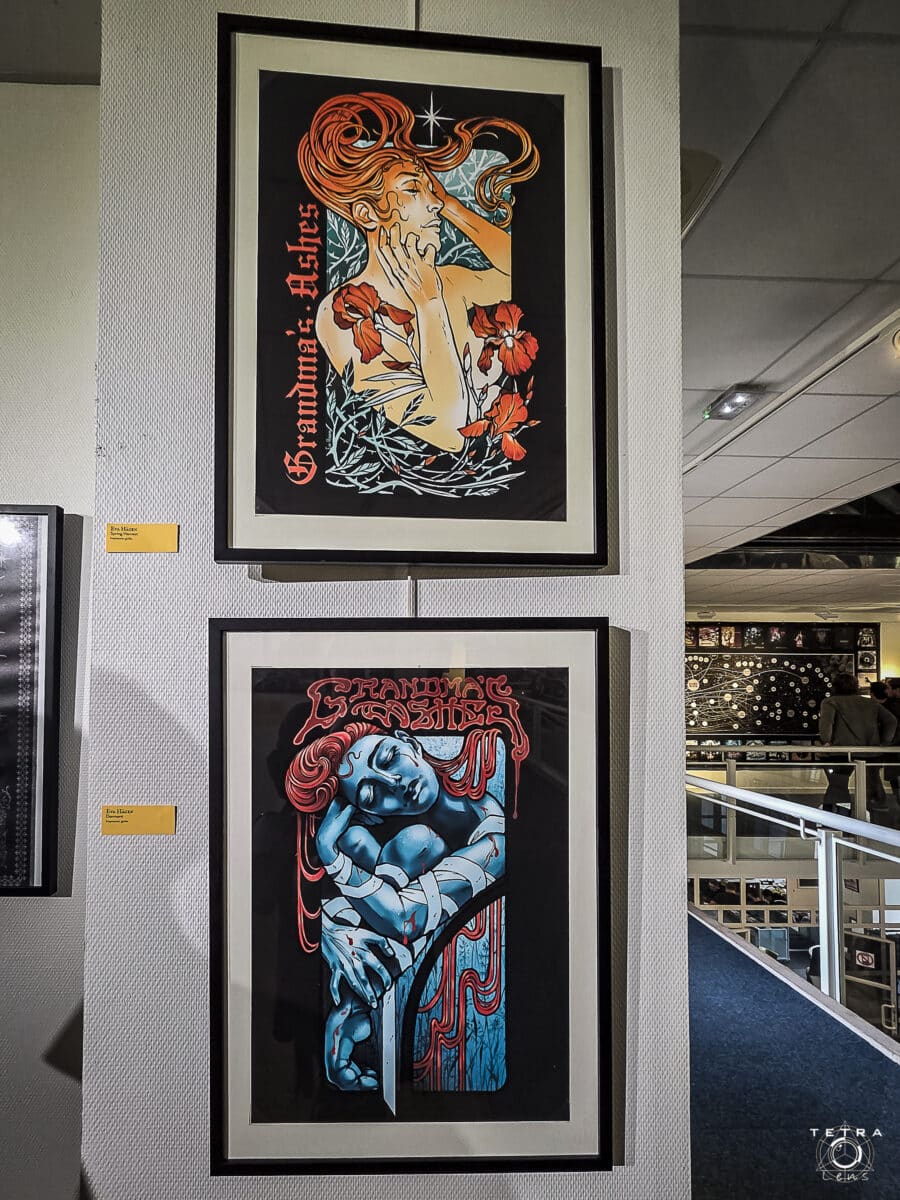
I also wanted plenty of women represented. I’m sick of going to festivals and being told, “There are only 5% women because there aren’t enough bands.” Yeah, maybe, but there are plenty of women making visual art. I wanted to cover as many continents as I could and get some Arka’n Asrafokor from Togo in there, because there’s a great scene in Africa. We had fewer pieces from Asia. Getting hold of the bands’ management teams can be tricky.
I also wanted a section for emerging artists. If you make a little room for them, they can get some visibility and show their work for the first time in a place like the media library. That’s how you keep the scene fresh. It’s the same problem with headliners. If you keep working with the same acts, younger bands eventually run out of room to grow.
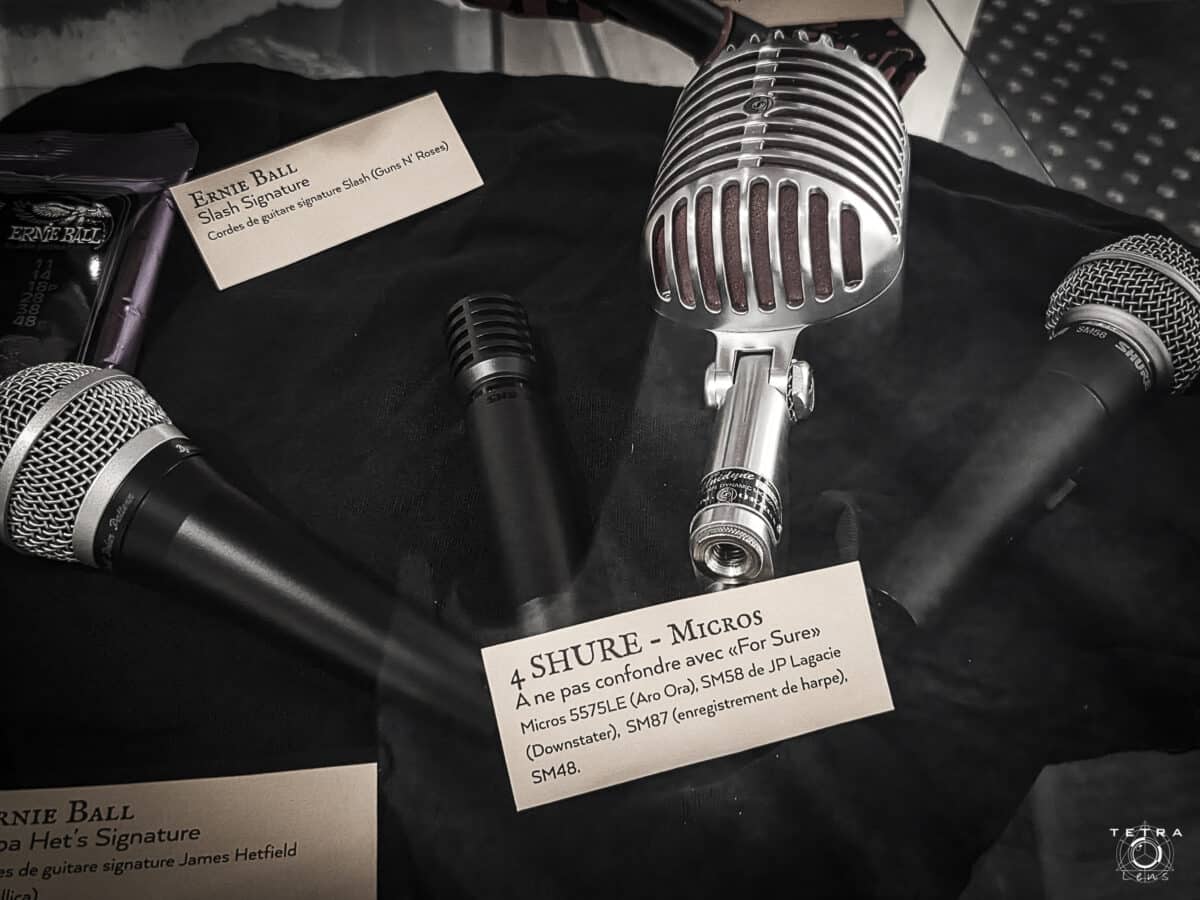
Julie Bordeau did the Bring Me the Horizon artwork for me. Everyone knows I’m no Bring Me fan, but the artwork is absolutely wild. She sent me the drawing, I went, “Whoa!” and she sent me the original. I also wanted Imminence because of the classical connection, which tied in with the display case on the other side where we have all the scores.
MZ: That diversity is part of what makes metal so rich…
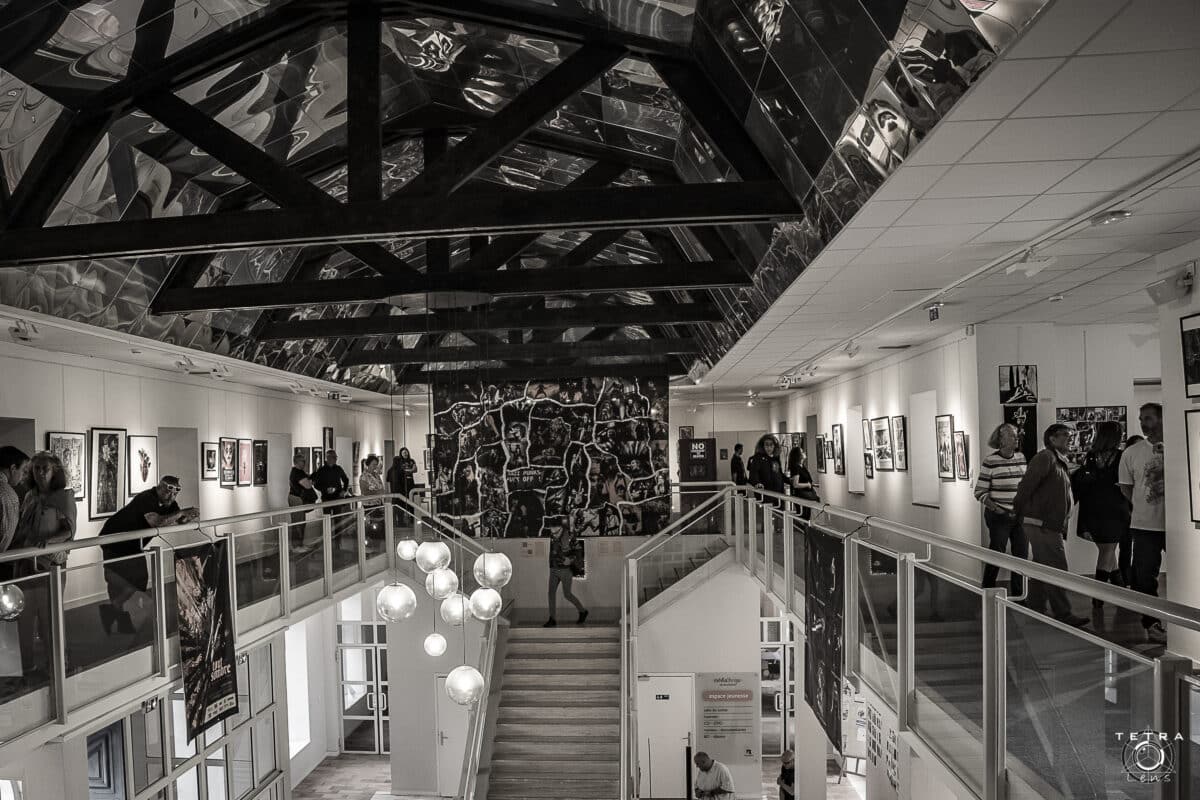
C: Yeah, I’d love to bring in more artists, but eventually you run out of space. Here I thought, “I’ll start with the space itself.” At the Philharmonie, we could rearrange everything. Here, when I suggested dividing the exhibition into sections, they said, “If you repaint the walls, you have to repaint the whole place, so you’ll lose half your budget.” Right, we’ll find another way! I could have done some completely wild stuff, but then you’d have three artists represented. Here you have 130 bands and 50 visual artists. You’ve got to give everyone a shot, too.
MZ: When I read the title, I immediately thought of a line by Béruriers Noirs, “As long as there’s darkness, there’s hope.” Is there a bit of that in this exhibition?
C: Fuck, I love the Bérus too! No, I like playing with contrasts, something I already do in my photography, and upending expectations. Death imagery is the first thing people expect from you. If you put on a metal exhibition without a single skull, you’ve blown it. I knew it was practically obligatory. It was also the easiest part.
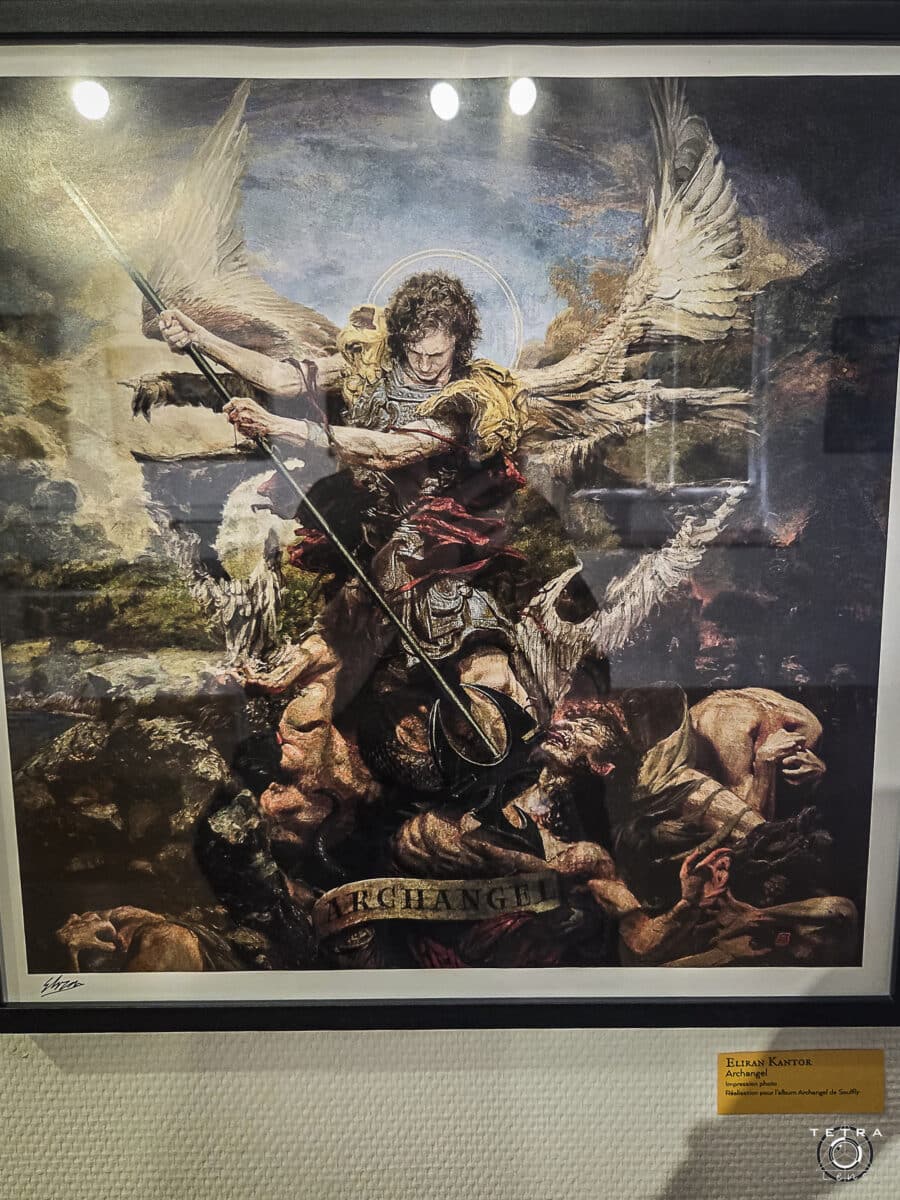
On the environmental side, people are finally hearing about Savage Lands, and there’s also Sea Shepherd and a whole bunch of artists who’ve done incredible things. I love what Heaven Shall Burn do. They’ve been Sea Shepherd ambassadors for a long time. Eliran Kantor’s artwork is a bloodbath. People stop in front of Guy Mishima’s piece and say, “Oh, we didn’t know that was the Landmvrks artwork.” I wanted to show people pieces they wouldn’t expect, just for the fun of it.
MZ: What do you think makes the bond between visual art and extreme music so strong?
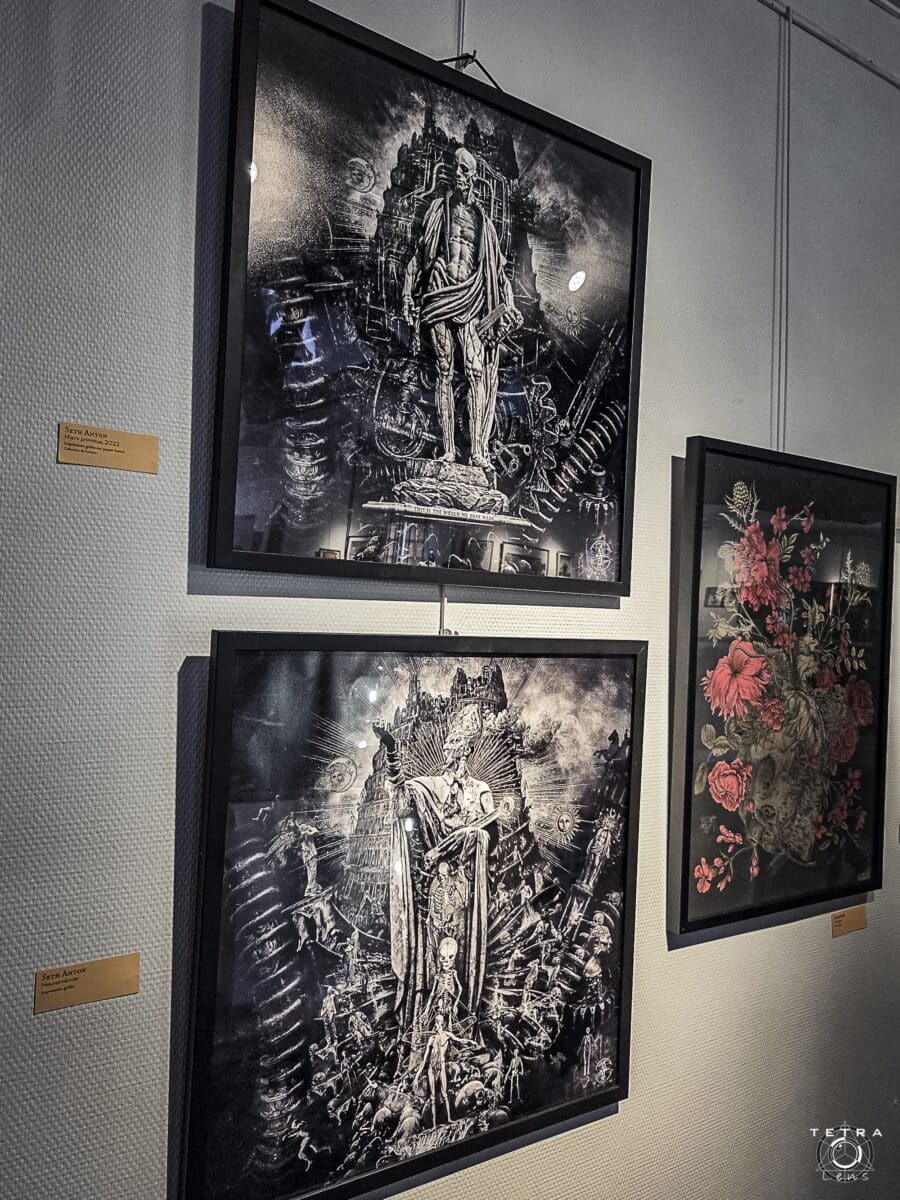
C: I can’t think of these artists as just making music. I’m trying to think of the ugliest album cover I’ve ever seen. I think of System of a Down’s Steal This Album! It looks awful, but it fits the message they wanted to get across. And I’m thrilled I managed to get hold of Queen of Patience, the piece Mariusz Lewandowski did for Lorna Shore. The detail is so sharp it looks like the original painting, even though it’s a reproduction. I don’t know how he did it. I tried to get a bit of pretty much every style.
MZ: What did you want to show through photography?
C: There’s Vincent Fouquet, who’s worked with Jinjer. Chasing likes isn’t necessarily the best approach for a photographer or artist. Stéphane, who I met while shooting at Chambord, worked for Géo. He still inspires all my landscape photography. I think he has 100 followers on Instagram, but his work is incredible. One beautiful large-format art photograph will always have more impact than 50 tiny shots dumped on social media.
We got some photos for the exhibition where you could tell AI was involved as soon as you blew them up. I prefer the grain of an old camera and an authentic artistic approach. You can love it or hate it. Art is subjective, but the people in this exhibition put hours of hard work into it. The painting with the sheep at the entrance, All Isn’t Dark, came from Gala Jenkins’ tattoo portfolio. The funny thing is that it’s also the design she tattooed on Thomas from Regarde les Hommes Tomber. I picked it without knowing that.
MZ: The exhibition also gives the whole visual culture around metal a life in the physical world…
C: We wear it on our T-shirts. It’d be pretty dumb to pass up the chance to put it in an exhibition. I couldn’t get any official Metallica artwork, but I’m really happy I can show people things they’ve seen on T-shirts and say, “Look, this is the original artwork or an official reproduction from the band.” I wrote to Kai Uwe Faust, “Hey, I’d love to include one of your Heilung drawings.” He wrote back, “No, I’ll make you one for the exhibition.”
There’s some beautiful artwork here, even if you don’t like metal. I doubt there are thousands of us metalheads in Rochefort, but if people come to see it and it makes them laugh or think, then it’s worked.
MZ: See you soon for another project?
C: Yes, we’re doing it again in 2027!
Credits — Interview by Tetralens (Emma B.) & FouPouDav. Thanks to Corentin Charbonnier.
The conversation 0
Different voices. A shared love of heavy music.
Be the first to share your thoughts.
What stands out to you? Start the conversation.
Join the conversation
Keep it thoughtful and respectful. Comments are reviewed before appearing.